
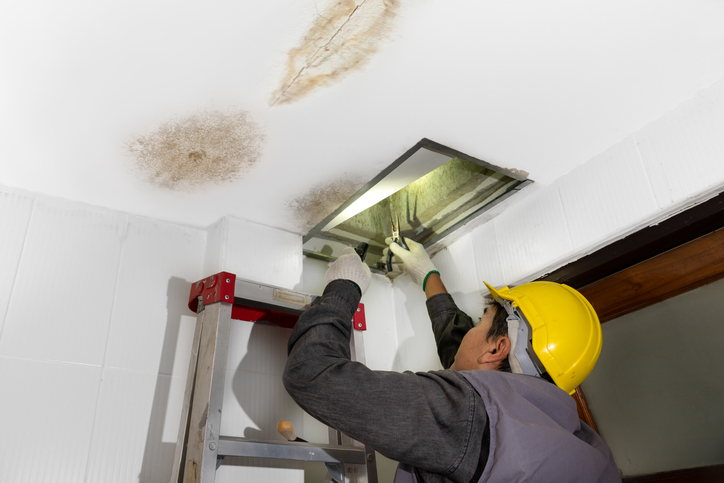
Could Mold Be Affecting Your Brain? The Hidden Connection Between Mycotoxins, Brain Fog, Gut Health, and Neuroinflammation
Why Mold Toxicity May Be One of the Most Overlooked Factors Affecting Your Memory, Mood, Energy, and Gut-Brain Connection
Your Health. Your Data. Your Life.
If I had a magic wand to help protect your brain, there are very few things I would place ahead of mold and mycotoxin exposure.
That’s a bold statement.
I know.
After all, most people think of mold as something that grows on old bread, forgotten leftovers, or damp basements.
Few people think about mold when they’re experiencing:
- Brain fog
- Fatigue
- Anxiety
- Memory issues
- Poor sleep
- Digestive symptoms
- Mood changes
- Headaches
- Difficulty concentrating
- Feeling disconnected from themselves
Yet over the years, I’ve had countless conversations with people who felt like they were slowly losing pieces of themselves.
Many had been told:
“Your labs look normal.”
“Maybe it’s stress.”
“You’re just getting older.”
“Everything appears fine.”
But they knew something wasn’t right.
Sometimes the missing piece turned out to be environmental.
Specifically, mycotoxins.
Invisible compounds produced by certain molds that may influence the body in ways many people never imagine.
This article isn’t about fear.
It’s about awareness.
Because you can’t address what you don’t know exists.
And sometimes healing begins by identifying obstacles that have quietly been standing in your way all along.
I Don’t Write About Mold Because I Read About It
I write about mold because I lived it.
Years ago, mold illness affected my life in ways I never imagined.
My energy declined.
My health changed.
My brain felt different.
At one point, I temporarily lost vision in my left eye.
The person I saw in the mirror didn’t feel like the person I knew myself to be.
Looking back, that experience fundamentally changed how I view health.
It taught me that sometimes the obstacle isn’t inside us.
Sometimes it’s in the environment surrounding us.
Sometimes the very place we call home may be influencing our health more than we realize.
That experience is one reason I remain passionate about helping people ask better questions.
Not because mold is the answer to everything.
But because it deserves consideration when symptoms don’t make sense.
Your Brain Is Expensive Real Estate
Let’s talk about your brain for a moment.
Your brain represents roughly 2% of your body weight.
Yet it consumes approximately 20% of your body’s energy.
Think about that.
The organ responsible for:
- Your memories
- Your relationships
- Your personality
- Your creativity
- Your decision-making
- Your dreams
- Your sense of humor
- Your resilience
Requires an enormous amount of energy every single day.
Your brain remembers your first kiss.
The smell of your grandmother’s kitchen.
The day your child was born.
The people you’ve loved.
The lessons you’ve learned.
Everything that makes you uniquely you.
In many ways, your brain is the mainframe of who you are.
Protecting it matters.
What Are Mycotoxins?
Mycotoxins are toxic compounds produced by certain species of mold.
These compounds may be found in:
- Water-damaged buildings
- Homes
- Schools
- Workplaces
- Stored foods
- Agricultural products
Not all molds produce mycotoxins.
Not all people exposed to mold become ill.
But for some individuals, these compounds appear to place significant stress on the body.
Researchers continue investigating how mycotoxins may influence:
- Immune function
- Inflammation
- Oxidative stress
- Mitochondrial function
- Neurological health
- Digestive health
- Hormonal balance
And perhaps most importantly…
How we feel.
Could Mold Be Affecting Your Brain?
Researchers continue exploring how mold exposure and mycotoxins may influence neurological function.
Areas of interest include:
Neuroinflammation
Inflammation isn’t always bad.
It’s part of normal healing.
But chronic inflammatory signaling may influence how the brain functions.
Researchers continue investigating how mycotoxins may contribute to neuroinflammatory processes.
Oxidative Stress
The brain consumes enormous amounts of oxygen.
That makes it particularly vulnerable to oxidative stress.
Several mycotoxins have been associated with increased oxidative burden.
When oxidative stress increases, many people report:
- Mental fatigue
- Reduced focus
- Memory challenges
- Feeling mentally slower
Mitochondrial Function
Mitochondria create energy.
No energy.
No function.
Many individuals concerned about mold exposure describe profound fatigue that doesn’t improve with sleep.
Researchers continue exploring relationships between mycotoxins and mitochondrial health.
Neurotransmitter Balance
Neurotransmitters help regulate:
- Mood
- Motivation
- Focus
- Attention
- Emotional resilience
Emerging research suggests environmental exposures may influence these delicate systems.
Brain Fog
Perhaps the most common symptom people report.
Brain fog isn’t a medical diagnosis.
It’s a description.
People often describe:
- Forgetting words
- Losing their train of thought
- Difficulty multitasking
- Reduced concentration
- Feeling mentally disconnected
For many, brain fog is one of the earliest signs that something isn’t right.
The Gut-Brain-Mold Connection
HealthyGutHealthyBrain exists because these systems are inseparable.
Your gut and brain communicate constantly through:
- The vagus nerve
- Neurotransmitters
- Hormones
- Immune messengers
- Microbial metabolites
The gut and brain are never having separate conversations.
They’re always talking.
And environmental toxins may become part of that conversation.
When gut function becomes compromised, communication throughout the body may change.
Including communication with the brain.
This is one reason people may experience:
- Brain fog alongside digestive symptoms
- Anxiety alongside gut discomfort
- Fatigue alongside food sensitivities
- Mood changes alongside inflammation
The systems are connected.
They always have been.
Mold, Leaky Gut, and Intestinal Permeability
Many people have heard the term “leaky gut.”
The more accurate term is increased intestinal permeability.
Your intestinal lining acts as a gatekeeper.
It determines what enters circulation and what remains within the digestive tract.
Researchers continue investigating how environmental stressors may influence:
- Gut barrier integrity
- Microbial diversity
- Immune regulation
- Inflammatory signaling
When these systems become disrupted, communication throughout the body may change.
Including communication with the brain.
Mold, Histamine, and Mast Cell Activation
One area receiving increasing attention is the relationship between mold exposure, histamine, and mast cell activation.
Many individuals experiencing mold-related illness report symptoms such as:
- Flushing
- Itching
- Headaches
- Anxiety
- Sleep disturbances
- Food sensitivities
Mast cells play an important role in immune defense.
When activated excessively, they may contribute to widespread symptoms.
For some individuals, mold may become one of many factors influencing mast cell activity.
Why Some People Seem More Sensitive Than Others
One question I hear often is:
“Why does mold affect some people more than others?”
The answer isn’t fully understood.
Potential factors may include:
- Genetics
- Immune status
- Total toxic burden
- Previous infections
- Nutritional status
- Gut health
- Stress levels
- Environmental exposures
No two people are identical.
Which means no two responses are identical.
This is one reason personalized investigation matters.
Mold and Sleep: The Forgotten Connection
Sleep is when much of the body’s restoration occurs.
It’s also when the brain performs important housekeeping functions.
Many individuals concerned about mold exposure report:
- Difficulty falling asleep
- Frequent waking
- Unrefreshing sleep
- Vivid dreams
- Feeling exhausted despite adequate sleep
Poor sleep affects:
- Memory
- Mood
- Focus
- Energy
- Emotional resilience
Which means sleep deserves a place in the mold conversation.
Could Mold Be Part of Your Story?
If you’ve spent months—or years—wondering why you don’t feel like yourself, perhaps it’s time to ask a different question.
Could your environment be part of the story?
The MosaicDX MycoTOX Profile measures several common mycotoxins using a simple urine sample.
No complicated appointments.
No waiting rooms.
Just meaningful information.
Because sometimes the next step isn’t another supplement.
It’s understanding.
Hidden Sources of Mold Exposure
Many people assume mold is obvious.
Sometimes it is.
Sometimes it isn’t.
Potential sources include:
- Water-damaged homes
- Leaky roofs
- Plumbing leaks
- HVAC systems
- Crawl spaces
- Basements
- Flooded buildings
- RVs
- Vehicles
- Schools
- Workplaces
Mold doesn’t always announce itself.
Sometimes the body notices before we do.
If Elon Gets Us to the Moon or Mars…
I have a feeling Elon Musk is going to get us farther into space than most of us ever imagined.
And if humans eventually establish communities on Mars, I suspect engineers will pay very close attention to air quality, microbial growth, environmental toxins, and mold prevention.
Why?
Because healthy brains build civilizations.
Whether we’re living in Utah.
Alaska.
New York.
Or Mars.
Until then, perhaps we should pay closer attention to the environments we’re living in right here on Earth.
Why Testing Matters
I say this often: You cannot optimize what you never measure.
Guessing isn’t a strategy.
Testing doesn’t provide every answer.
But it may reveal whether mycotoxins deserve a place in the conversation.
Knowledge creates choices.
Choices create change.
And meaningful information often creates momentum.
Stop Guessing (Hoping…)
If mold exposure has crossed your mind even once, consider exploring it further.
Testing doesn’t diagnose every symptom.
But it may help identify an environmental factor that deserves attention.
Because understanding your body begins with understanding what may be influencing it.
Knowledge is empowering. TEST
And sometimes one test can provide a completely new perspective.
Healing Rarely Comes From One Big Answer
One of the most important lessons I’ve learned in healthcare is this:
Healing rarely comes from a single dramatic discovery.
More often it comes from:
- Better questions
- Meaningful data
- Small insights
- Consistent action
A nutrient deficiency.
A sleep issue.
A gut imbalance.
An environmental exposure.
Each clue helps tell the story.
Mycotoxins may not be the entire story.
But for some people, they are an important chapter.
Need Help Connecting the Dots?
Lab results are information.
Understanding is something different.
If you’re navigating:
- Brain fog
- Fatigue
- Mold concerns
- Gut issues
- Chronic symptoms
- Food sensitivities
An educational consultation may help you better understand your results and determine your next steps.
You don’t have to figure it all out alone. Click Here to learn more!
Because information becomes powerful when it becomes understanding.
A Final Thought
If I truly had a magic wand, I wouldn’t use it to eliminate every challenge.
I’d use it to help people see what they may have overlooked.
I’d help them understand the conversations happening between their environment, their gut, their immune system, and their brain.
Because your brain is more than an organ.
It is the keeper of your stories.
Your memories.
Your relationships.
Your dreams.
Your ability to love.
Your ability to laugh.
Your ability to hope.
All that you are.
And all that you know.
Mold doesn’t always announce itself.
But your body often does.
Listen carefully.
It may be trying to tell you something.
References
- Brewer JH, et al. Detection of mycotoxins in patients with chronic fatigue syndrome. Toxins. 2013.
- Hope J. Illness from exposure to water-damaged buildings. Scientific World Journal. 2013.
- Ratnaseelan AM, et al. Mold and mycotoxin exposure and brain disorders. Toxins. 2018.
- Kilburn KH. Neurobehavioral impairment in mold-exposed workers. Arch Environ Health. 2003.
- Straus DC. Fungal contamination and sick building syndrome. Front Biosci. 2004.
- Bennett JW, Klich M. Mycotoxins. Clin Microbiol Rev. 2003.
- Shoemaker RC, et al. Inflammatory responses in mold illness. Neurotoxicol Teratol. 2006.
- Gray MR, et al. Indoor mold exposure and neurological symptoms. Toxicol Ind Health. 2003.
- WHO. Dampness and Mould Guidelines.
- CDC. Mold and Health.
- Pestka JJ. Deoxynivalenol and immune modulation. Toxins. 2010.
- Sardiñas N. Mold exposure and human health. Rev Cubana Hig Epidemiol. 2002.
Disclaimer
The information provided in this article is intended for educational and informational purposes only and should not be construed as medical advice, diagnosis, or treatment. The content reflects current research, clinical observations, and the author’s professional experience as a Family Nurse Practitioner, but it is not intended to replace consultation with your physician or other qualified healthcare professional.
Mold exposure, mycotoxin testing, gut health, brain health, and environmental medicine are complex and evolving areas of research. Individual responses to environmental exposures vary significantly, and symptoms discussed in this article may have multiple potential causes. Laboratory testing should always be interpreted within the context of your personal medical history, symptoms, medications, lifestyle factors, and overall clinical presentation.
MyLabsForLife and HealthyGutHealthyBrain do not diagnose, treat, cure, or prevent any disease. Any laboratory testing discussed is intended to provide educational information that may help support informed conversations with your healthcare provider.
Never disregard professional medical advice, delay seeking medical care, or discontinue prescribed treatments based on information contained in this article. If you are experiencing a medical emergency, contact your physician or seek emergency medical attention immediately.
By reading this article, you acknowledge that responsibility for healthcare decisions remains between you and your licensed healthcare provider.
A Final Thought
You deserve answers.
You deserve to be heard.
You deserve the opportunity to understand the remarkable body and brain that carry you through this life.
Don’t settle for guessing when understanding is possible.